Connect experience. Build understanding. Increase engagement.
Baby Boomers, Generation X, Y, and Z now work side by side in the same workplace. Learn about their values and expectations. Discover the roots of intergenerational differences and stereotypes. Learn how to select communication channels and tools tailored to the needs of each group. Resolve conflicts and reduce misunderstandings through active listening, clear cooperation principles, and constructive feedback. Join the Intergenerational Communication training.

Different generations collaborate in today’s labor market. This creates opportunities for exchanging experience and transferring knowledge, but also challenges related to expectations, pace of work, and approaches to tasks and decision-making. During the training, you will analyze generational differences and learn how to choose appropriate communication tools.
Tensions increase when younger employees use new technologies and social media, while older generations prefer other forms of communication. Older employees may assume younger ones are dismissive, which lowers mutual respect. Younger generations, in turn, may feel underestimated or discriminated against. You will learn how to listen effectively, ask the right questions, adapt your communication style, and provide feedback that strengthens relationships and team engagement.
If you care about smoother team performance and better information flow, this training will help you organize communication principles, work on specific behaviors and motivation, and implement practical daily solutions. Ineffective communication can also lead employees to seek new employment opportunities.
The Intergenerational Communication training is designed for managers and team leaders (CEOs, team leaders, project managers, coordinators), HR specialists and trainers (recruiters, internal trainers), employees of companies, public institutions and NGOs, as well as teachers, trainers, and professionals working with youth or adults. It is for anyone who communicates daily with representatives of different generations and wants to improve workplace collaboration.


Before you assume that “they’re just like that,” consider what lies behind the other person’s reaction. In age-diverse teams, the same message can be interpreted very differently — and that is often where misunderstandings begin.
Improved team communication, fewer misunderstandings and conflicts, better information flow, and stronger relationships between generations are the key outcomes of this training. Together, we will define what you specifically want to improve in your workplace. Generationally diverse teams can also create a competitive advantage and better understand clients.
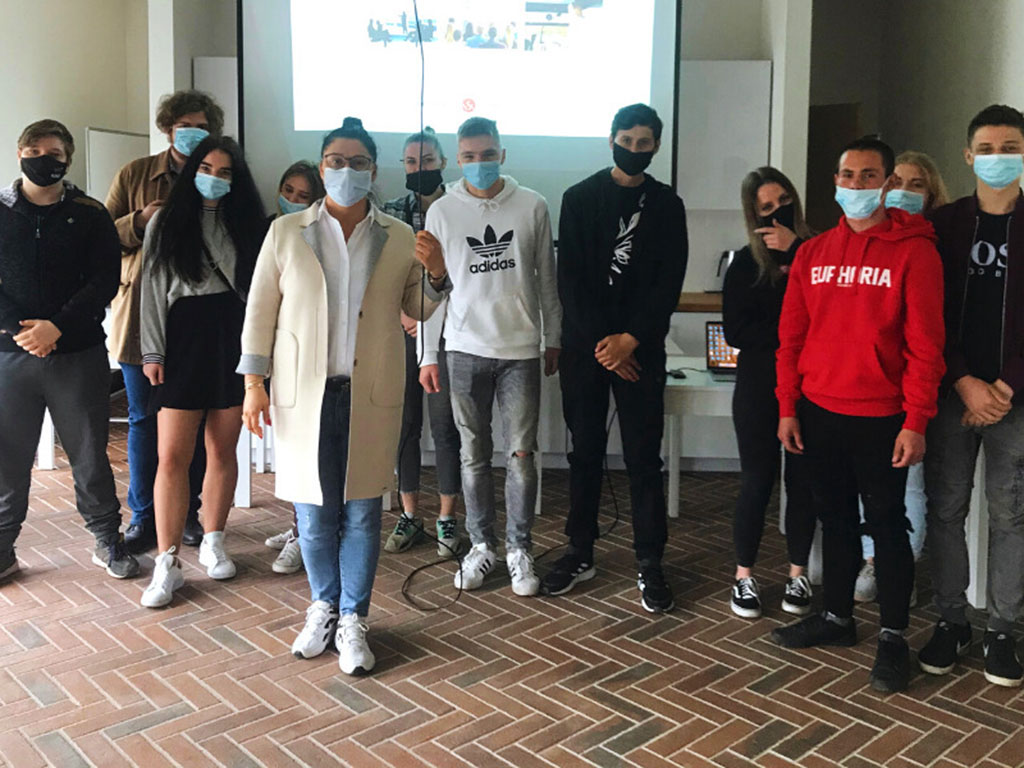
I conduct workshops for groups and teams based on real organizational situations. Participants learn how to adapt communication channels and tools, practice active listening, set boundaries, build authority, provide feedback, and resolve challenging intergenerational situations.
Founder of the School of Men’s and Women’s Style.
***
Graduate of Central Saint Martins University of the Arts in London, the University of Social Sciences, and the Monika Jaruzelska School of Style.
***
Associated with the fashion industry for over 10 years.
***
Provides image and communication training for companies and private clients.
***
Image consultant, STYLE COACH, COOL HUNTER.
***
Experienced speaker. She lectures at most universities in Poland and has worked with leading Polish TV stations (TVN, Polsat, TVP). She also hosted her own radio program.

This training does not impose one working style. It shows how to build a shared language despite differences in priorities, pace, tools, and habits. The foundation is active listening — one of the most important elements of effective intergenerational communication — along with using technologies appropriate for different generations to facilitate dialogue.
Sign up for the Intergenerational Communication training.
I conduct closed workshops for individual and corporate clients across Poland — including on-site training in Warsaw, Wrocław, Poznań, Kraków, and Katowice — tailoring each program to the organization’s and team’s specific needs.